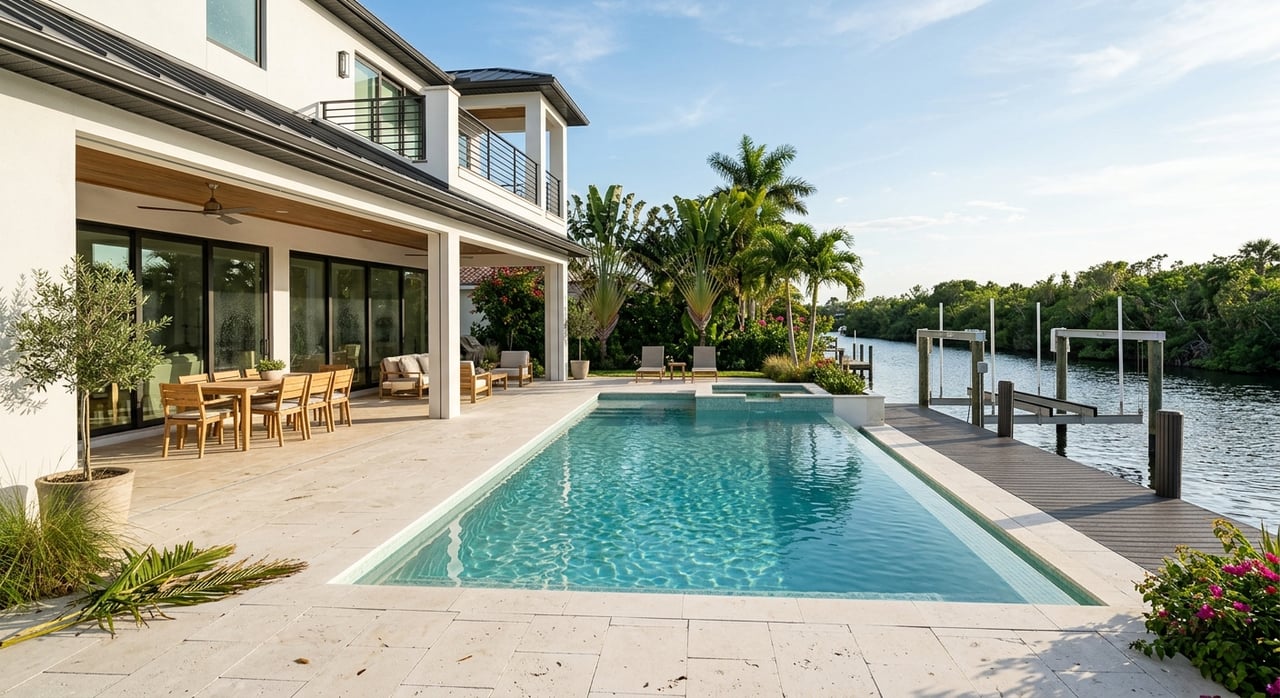
Selling In Cape Coral's Yacht Club: Maximizing Waterfront Value
If you own a waterfront home in Cape Coral’s Yacht Club, you are not selling just another house in a broad city market. You are selling access, views, boating potential, and a lifestyle that buyers can feel the moment they pull up. That creates opportunity, but it also means your pricing, preparation, and marketing need to be much more precise. In this guide, you’ll see what drives value in the Yacht Club, what buyers are likely to examine closely, and how to position your home to stand out. Let’s dive in.
Cape Coral is a water-centric city with more than 400 miles of canals, and many connect to the Caloosahatchee River and the Gulf. Within that broader waterfront setting, the Yacht Club stands out as a distinct micro-market shaped by river views, marina access, waterfront dining, beach access, and a more walkable environment.
The area also carries long-standing identity. City planning materials point to the original Yacht Club ballroom and Rotino Center dating back to 1962, which gives the neighborhood a landmark feel that is different from a newer waterfront pocket. When buyers look here, they are often responding to that mix of location, history, and boating lifestyle.
One of the biggest mistakes a seller can make is relying too heavily on broad Cape Coral averages. In March 2026, Redfin reported a citywide median sale price of $351,000, down 4.8% year over year, with homes taking about 69 days to sell. That data offers context, but it does not capture the premium attached to a well-positioned Yacht Club waterfront property.
In this part of Cape Coral, value often comes down to details that citywide pricing misses. A canal-front home with usable dockage, strong water orientation, and direct boating appeal can compete in a very different lane than a non-waterfront property or even another home with less favorable access.
When buyers compare Yacht Club homes, they are usually looking beyond the interior finishes. They are also weighing the real-world function of the water side of the property.
Key value drivers often include:
A home that tells a clear waterfront story usually has an advantage. That story should be based on facts, not assumptions.
For many Yacht Club buyers, boating access is not a bonus. It is a major reason they are shopping there in the first place. Cape Coral’s canal system was designed to support navigability along with flood control, water quality, and irrigation storage, and the city allocates annual funding for dredging to help maintain canal depth and safe boating access.
That matters because buyers may ask questions that go deeper than “Is it on the water?” They may want to know how easily they can get out, what type of vessel the property suits, and whether the location offers the type of access they actually want.
A city redevelopment plan notes that true sailboat access is unique to neighborhoods with direct access to the Caloosahatchee River and Matlacha Pass. In practical terms, that means not all waterfront is equal.
If your property offers a more desirable access pattern, that should be documented and explained carefully in the listing strategy. If it does not, your pricing and presentation should focus on the strengths it does offer, such as dock setup, water views, or outdoor living.
Before your home goes live, it helps to gather the records buyers are likely to request. Clean documentation can make your listing feel more credible and better maintained.
Consider organizing:
When you can answer waterfront questions early, you reduce uncertainty for buyers and help support value.
In the Yacht Club, the view is part of the product. City planning materials emphasize river views, a pedestrian-oriented setting, and expanded dock and pier elements along the canal. That tells you something important about how the area is being positioned and experienced.
For sellers, this means the premium is not simply about being waterfront. Buyers may notice whether your home is riverfront, basin-front, or canal-front, and whether the view feels open, framed, angled, or interrupted.
Your marketing should help buyers see how the home lives on the water. That may mean focusing less on generic room count and more on the spaces where the setting becomes real.
Examples include:
The goal is simple. Help buyers picture themselves using the property, not just touring it.
In any sale, condition matters. In a waterfront sale, it often matters even more because buyers are evaluating lifestyle and risk at the same time.
The city’s Yacht Club project page shows the area is still being rebuilt after Hurricane Ian, with work focused on docks, seawalls, dredging, boat-ramp relocation, and other marine elements. That context can shape how buyers think. They may look closely at maintenance records, repair quality, and the current state of every waterfront component.
If you have made repairs or improvements, be ready to present them in a clear, organized way. Buyers often respond well when a seller shows that the waterfront side of the property has been cared for with intention.
That may include:
Even if your home is visually beautiful, missing paperwork or unanswered questions can weaken confidence. On premium waterfront listings, confidence supports value.
In a neighborhood like the Yacht Club, presentation is not just marketing polish. It is part of the pricing strategy. The way your home is staged, photographed, and introduced to the market can shape how buyers perceive quality and worth.
The National Association of Realtors reported in its 2025 Profile of Home Staging that 83% of buyers’ agents said staging made it easier for buyers to visualize a property as their future home. More than a quarter of professionals also reported that staging led to a 1% to 10% increase in the dollar value offered.
For a Yacht Club property, the strongest visual moments are often outside. Buyers want to see how the home connects to the water and how the outdoor areas support the lifestyle.
Prioritize:
If rooms are empty or visually dated, virtual staging can help buyers understand scale and use, as long as material alterations are disclosed.
Timing can influence who sees your home and how quickly it gains traction. Visit Florida identifies December through April as the best time to visit Cape Coral, which also aligns with peak tourist season.
For sellers in the Yacht Club, that window may bring stronger visibility with out-of-market buyers, second-home shoppers, and boating-oriented visitors who are already in Southwest Florida and actively comparing waterfront options. That does not mean you cannot sell in other seasons, but it does support the case for launching when the buyer pool is naturally more active.
The Yacht Club revitalization is part of the area’s current story, but it should be presented with accuracy. As of the city’s March 2026 update, Council had not yet determined a funding source for the full project and was moving ahead with a phased approach that prioritizes revenue-generating elements such as the Boathouse and docks.
That means the area has credible long-term upside, but sellers should avoid presenting the amenity package as fully complete or guaranteed on a near-term schedule. Buyers tend to respond best when you share the opportunity honestly and keep expectations grounded.
The likely buyer pool in this area is not generic. Based on the city’s waterfront planning language and Cape Coral’s positioning as a boating destination, interest is likely to come from boating-focused second-home buyers, waterfront purchasers, and local move-up buyers who value direct-water access and proximity to the Yacht Club setting.
That is why generic listing language often underperforms here. Your home needs a strategy that matches the property story, the access details, and the expectations of a waterfront buyer who knows the difference.
A well-positioned Yacht Club listing usually benefits from a more tailored approach, such as:
When these pieces work together, your home is easier to understand, easier to trust, and more likely to attract the right buyer.
If you are thinking about selling in the Yacht Club, the best first step is a strategy built around your specific water access, view orientation, property condition, and timing goals. For tailored guidance on how to position your home in this waterfront micro-market, connect with McMurray & Members.

A Local's Guide to the Best Golf Courses in Fort Myers.
Why Mortgage Pre-Approval in Fort Myers Sets Serious Buyers Apart.
Timing Your Sale: The Best Time to Sell a House in Fort Myers.
Debunking the Most Common Home Buying Myths in Fort Myers.
You will appreciate working with a team who is more like an extended family, one that takes care of each other and encourages success. Plus, we are backed by the strength of Royal Shell.