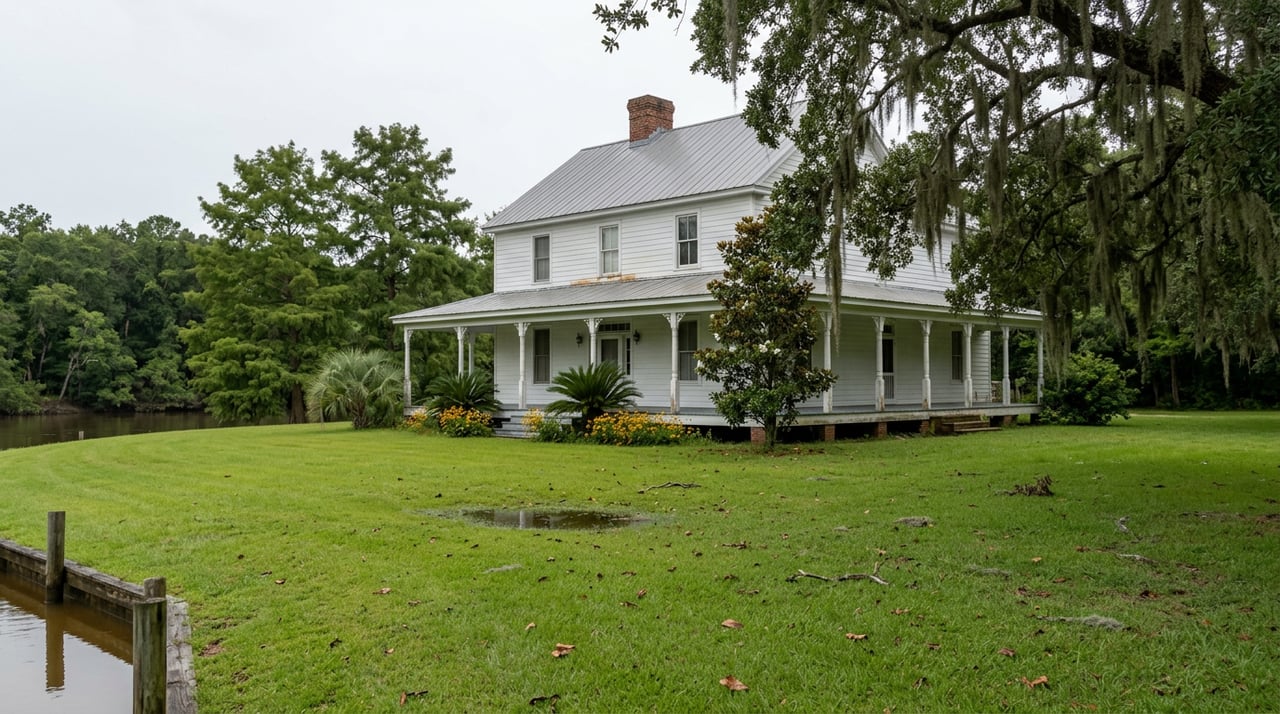
The Diner Alva Almost Lost, and the Brewery That Showed Up Anyway
In May, Nadine Stoll sat down and wrote the Facebook post announcing a decision she said she had been turning over for three years. She owned Alva Country Diner, the coffee-cup-signed spot on State Road 80 that's fed this stretch of river since 1994, and she was telling her regulars she was moving home to Switzerland. If nobody bought the place by the end of July, she wrote, it would close for good.
Eight hours later she had a dozen replies. By the time she signed a contract in early June, the number had climbed past 85.
That figure is the one worth sitting with. Alva doesn't have a downtown in any conventional sense. It has a post office, a produce stand, a couple of churches, and, until a new owner stepped in, exactly two sit-down places to eat. When one of those two looked like it might disappear, the response from a town this size wasn't mild concern. It was 85 separate people trying to buy a diner most of them will never own.
That's the real story unfolding in Alva this year. Not that the area is growing, anyone who drives State Road 80 already knows that from the traffic. It's that the town's own commercial center is thin enough that losing or gaining a single business changes what daily life here actually feels like.
The building that houses Alva Country Diner has been feeding people in some form since the 1950s, when it started as a gas station before cycling through a pizza joint and a spot called Bernie's Hideaway. Steve Sexton opened it as Alva Diner in 1994. Stoll bought in with a partner in 2018 and had been running it solo since 2020, watching the building age without the renovation budget to keep pace.
When she posted her announcement, she was blunt that the property needed work. "The building has been neglected for 20 years," she told a News-Press reporter. She wasn't selling a turnkey business. She was selling a piece of Alva's identity that happened to need a new roof.
The buyers who stood out from that flood of interest were Michelle and Chris Lussier, who already run the Edison Lunch Box inside the Lee County Justice Center in downtown Fort Myers and have lived in Alva for four years. They closed on the land and restaurant together for just under $950,000 and have said they plan to keep the broasted chicken and Friday fish fry intact while adding baked goods and ice cream, with a possible short closure this year for kitchen renovations. One longtime patron summed up why the sale mattered so much to people who don't cook their own breakfast: losing the diner would have meant losing one of only two places in town to eat out.
That's not a complaint you'd hear in a place with a real commercial strip. It's the math of a town where the loss of a single restaurant is a math problem for everyone, not an inconvenience for a few.
While the diner's survival came down to loyalty from people who already live here, the newest business in Alva is betting on people who don't.
Anarchy Ale Works opened on March 1 at 21450 Palm Beach Boulevard, inside a former QuickMart that owner John Ford spent time rebuilding after Hurricane Ian brought stricter FEMA scrutiny to the whole stretch. Ford is a former Southwest Florida pharmacist who registered the Anarchy name back in 2009 and finally built the brewery when his last pharmacy job ended. He planned to open with 14 house-brewed beers on tap. By the time a Gulfshore Business reporter visited two months later, the count had grown to 18, including an imperial stout called Mae Nak that's become the taproom's most requested pour, alongside beers named Alva Sunshine, Patriot's Blood, and Death Stout.
Ford runs the place with no investors and no bank loan, which he says was the point. His daughter Tia books local musicians for weekend sets on the outdoor patio, and two rotating food trucks, Chicken Mafia and Letecia's Fil-Am Kitchen, cover the food side so Ford doesn't have to run a kitchen on top of a brewhouse.
The part of Ford's reasoning that matters most for understanding Alva isn't the beer list. It's why he chose the corner at all. He'd initially written the location off as too far out of the way, until he looked at the traffic counts. Roughly 23,000 cars pass that stretch of road every day, headed toward Babcock Ranch, Portico, River Hall, and Verandah, the newer communities ringing Alva on nearly every side. Those drivers, Ford figured, had nowhere close to stop without continuing into Fort Myers.
Put the diner and the brewery side by side and you get two different survival strategies for the same small town. The diner made it because enough people who already live here refused to let it close. The brewery is betting it can thrive on people who were never planning to stop in Alva at all, until now they have a reason to.
Caloosahatchee Regional Park runs the same way, on a longer clock. Lee County leases the land from the state and maintains 20 miles of trails with a staff of four and a rotation of volunteers, which is why most weekends the park still feels close to private: hikers on the river trail, horses on the equestrian paths, a kayak launch and fishing pier that rarely see a line.
A handful of weekends a year, that changes completely. This spring brought the Caloosa Crank Fest, a three-stage time-trial mountain bike race across roughly 11 miles of singletrack, releasing riders one at a time so each is racing the clock instead of the field. The first weekend of December brings the bigger swing: the Caloosa Fest Ultra 50K on Saturday, then the Caloosa Fest 5K and half marathon on Sunday, both routed across the park's Green, Black, and Blue trails with aid stations stocked for runners covering everything from a beginner-friendly loop to more than 13 miles of technical terrain.
For one or two days, Alva becomes a finish line for people who drove in from well outside the county. Then the gate closes at dusk, the trails empty out, and the park goes back to belonging mostly to the people who live close enough to use it on a Tuesday.
Not everything in Alva rises or falls with who's driving past. The Alva Garden Club, a nonprofit that has organized around gardening and beautification since 1957, holds its annual Strawberry Festival and Plant Sale each March, funding two community gardens and programs at the Alva School with nothing more complicated than shortcake and plant starts sold out of the Alva United Methodist Church. The Alva Museum's Cracker Cowboy Heritage Festival, three days each May, keeps the town's ranching history in front of people the same way it has for years.
Those events don't need a traffic study to survive. They run on the same kind of loyalty that saved the diner, just spread out across a full year instead of concentrated into one anxious summer.
That's the honest shape of Alva right now. A town too small to have a real commercial center, which is exactly why the businesses it does have carry so much weight when one is threatened and so much promise when a new one bets on the growth stacking up just outside its edges.
If you're already part of this stretch of the Caloosahatchee and you're thinking about what comes next for your own place here, whether that's staying put, adding on, or eventually selling into a market that's clearly paying attention to Alva now, the team at McMurray & Members knows this river corridor as well as anyone working it. Let's Talk.

A Local's Guide to the Best Golf Courses in Fort Myers.
Why Mortgage Pre-Approval in Fort Myers Sets Serious Buyers Apart.
Timing Your Sale: The Best Time to Sell a House in Fort Myers.
Debunking the Most Common Home Buying Myths in Fort Myers.
You will appreciate working with a team who is more like an extended family, one that takes care of each other and encourages success. Plus, we are backed by the strength of Royal Shell.